"AI does not care who you are. It rewards only one thing: clarity."
A researcher who quantified the barriers. A leader who navigated them. A teacher who refuses to let others face them alone. Dr. Raina founded Bloom AI University on a conviction: when the right tools exist and access is democratized, merit can finally matter.
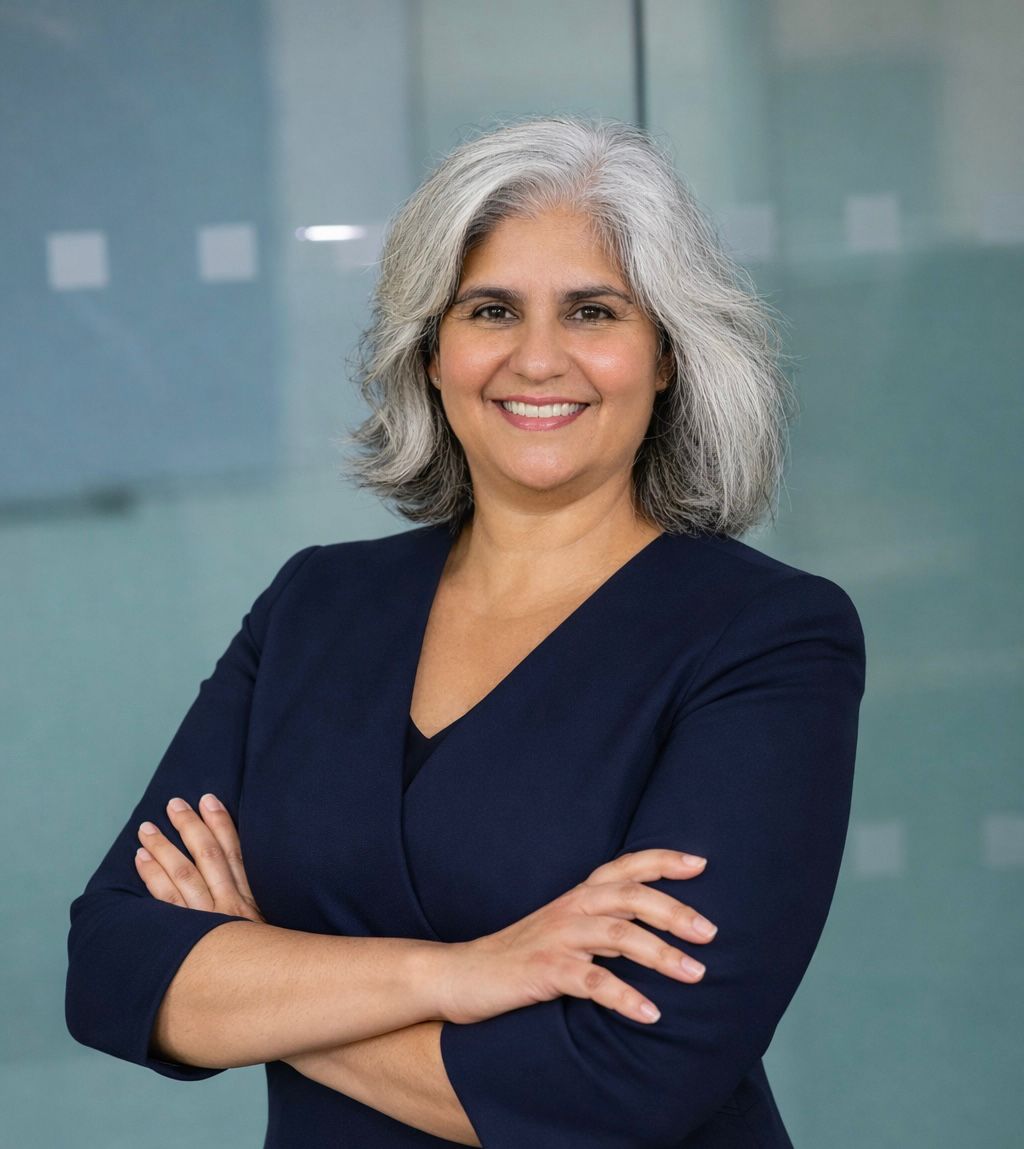
In 2024, Dr. Raina completed her doctoral dissertation: "The Motherhood Penalty in the 21st Century: A Replication and Extension." The findings were not abstract—they were a map of the invisible architecture that constrains half of humanity.
Using data spanning four decades, she documented what millions of women have experienced but rarely seen quantified: mothers continue to face wage penalties ranging from 14 to 32 percent—not because they are less capable, less educated, or less committed, but because the systems measuring their value were built before they arrived.
Her research traced the problem through every layer of the modern economy. Human capital theory. Compensating wage differentials. Gender role constraints. Status discrimination. Normative discrimination. The maternal wall. The sticky floor. The leaky pipeline. Each mechanism, meticulously documented. Each barrier, empirically proven.
But Dr. Raina did not complete this research to catalog injustice. She completed it to understand the architecture of inequity—so she could build something different.
Artificial Intelligence does not care who you are. It does not see gender. Geography. Pedigree. Parentage. For the first time in human history, a tool exists that amplifies competence independent of identity.
— Dr. Anu RainaDr. Raina's research revealed the mechanisms of inequity. Her insight revealed that AI disrupts every single one of them.
In the old economy, expertise was hoarded. It lived in expensive institutions, behind credentialed gatekeepers, in networks accessible only to those already inside. AI changes this. The collective knowledge of humanity is now accessible to anyone who knows how to ask for it.
The barrier is no longer access. The barrier is competence in asking.
The old economy rewarded credentials—degrees, titles, affiliations. These served as proxies for competence. AI does not care about credentials. It responds to the quality of the instruction it receives. A precisely structured prompt from someone with no formal education will outperform a vague prompt from someone with three advanced degrees.
For the first time, the playing field is flat.
In the old economy, success required proximity—to urban centers, to corporate headquarters, to the rooms where decisions were made. AI enables work that is location-independent and time-flexible. A mother can build a sophisticated AI-assisted workflow while her children sleep. A professional in a tier-two city can deliver output indistinguishable from someone in a tier-one metropolis.
The constraint of physical presence dissolves.
One of the most punishing aspects of the motherhood penalty is the depreciation of human capital during career breaks. Skills atrophy. Industries evolve. AI compresses the re-entry timeline. Skills that once took months to rebuild can be reconstructed in weeks. Knowledge gaps that once required expensive retraining can be filled through intelligent self-study.
The cost of stepping away decreases when the tools for stepping back are this powerful.
Her formal education began in Canada, where she earned dual undergraduate degrees in Pharmaceutical Technology and Biochemistry—a foundation built on scientific rigor, analytical precision, and the discipline required to master complex systems. She pursued an MBA, then a Master Certificate in Project Management from York University, layering business acumen and operational expertise onto her scientific training.
For nearly three decades, Dr. Raina has operated at the intersection of technology, healthcare, and enterprise leadership. As Director of Information Technology at a major pharmaceutical company, she oversees multi-million-dollar technology initiatives that span Quality, Supply Chain, Manufacturing, and IT. In an industry where precision can mean the difference between life and death, she has become the person others trust to get it right.
Even while leading enterprise-scale projects, Dr. Raina has maintained a parallel commitment to education. As Adjunct Professor at the University of North Carolina at Charlotte, she teaches Business Project Management to MBA students—bringing real-world experience into every lecture. Her students describe her as "the TRUTH"—someone who knows the subject matter, has the industry experience, and what sets her apart is that she cares.
Dr. Raina is the mother of three children. She has navigated the very tensions her research documents—the pull between professional ambition and parental presence, the calculations about timing and tradeoffs, the daily decisions that aggregate into career trajectories. She did not study the motherhood penalty from a distance. She lived it while building the career that would allow her to do something about it.
Dr. Raina's philosophy is neither idealistic nor cynical. It is precise.
She believes in equity on merit—the principle that outcomes should reflect contribution, capability, and effort rather than identity, circumstance, or inherited advantage.
This is not the same as pretending that barriers do not exist. Her research proves they do. It is not the same as assuming that effort alone overcomes structural disadvantage. Her data shows it often does not.
But it is the conviction that when the right tools exist, and when access to those tools is genuinely democratized, merit can finally matter.
AI is that tool. Not because it is magic, but because it is indifferent. It does not see gender. It does not see geography. It sees only the quality of the instruction it receives.
Teaching people to use AI well is not a technical exercise. It is an act of economic justice.
Bloom AI University was not founded to serve those who already have access. It was founded to extend access to those who have been systematically excluded.
Who've been told AI requires coding skills they don't possess
Who need to rebuild skills rapidly after career breaks
Who lack networks that make elite institutions accessible
Who have the intelligence to compete globally but lack pathways
Who've been told the future doesn't include them
Told explicitly or implicitly that the future isn't for them
Bloom AI University is open to the world — but currently building meaningful partnerships across seven countries: the United States, India, the Philippines, Canada, Australia, New Zealand, and the United Kingdom. Each faces a distinct version of the same crisis: professionals and students who need to think clearly, work effectively, and thrive in a world reshaped by AI.
Our partners provide local reach. We provide the curriculum, the pedagogy, and the quality assurance. Together, we are building professional competence — not just technical skill, but logical thinking, structured reasoning, and the capacity to work alongside intelligent systems.
Dr. Raina founded Bloom AI University on a simple premise: Clarity in the Age of AI. Not hype. Not shortcuts. Not the illusion of expertise through casual use of technology. Real competence. The kind that transforms careers. The kind that creates economic mobility. The kind that changes not just individuals, but families, communities, and nations.
The name itself—Bloom—captures the philosophy. Growth that is organic. Development that unfolds naturally when the right conditions exist. Potential that was always present, finally given room to flourish.
Mothers compressing months of re-skilling into weeks
Tier-two professionals delivering tier-one output
First-gen learners accessing elite knowledge
Women demonstrating competence through quality
This leverage is what Bloom AI University exists to provide.
Dr. Anu Raina spent her career learning—in laboratories, in boardrooms, in classrooms, in research. She has navigated the barriers her research documents and built the credentials that allow her to speak with authority about both the problems and the solutions. But she did not acquire this knowledge to keep it. She acquired it to share it.
The great equalizer has arrived. The only question is whether you will learn to use it.